

Your shopping cart is empty!

Fluorescence Spectroscopy of Vegetable Powders for Latent Fingerprint Visualization
This study highlights broccoli powder's strong fluorescence (417/678 nm) in enhancing latent fingerprint contrast on rough surfaces via eco-friendly, cost-effective vegetable powder fluorescence spectroscopy. Ideal for forensic applications.it ensures high sensitivity and minimal background interference.
1.Research BackgroundFingerprint examination, a cornerstone of forensic identification, remains critical in judicial practice. Enhancing the contrast of latent fingerprints on various surfaces during crime scene investigations is essential.
Optical Non-Destructive Testing:- Effective for smooth surfaces (e.g., glass, polished floors).
- Limited for rough surfaces, requiring physical/ chemical enhancement.
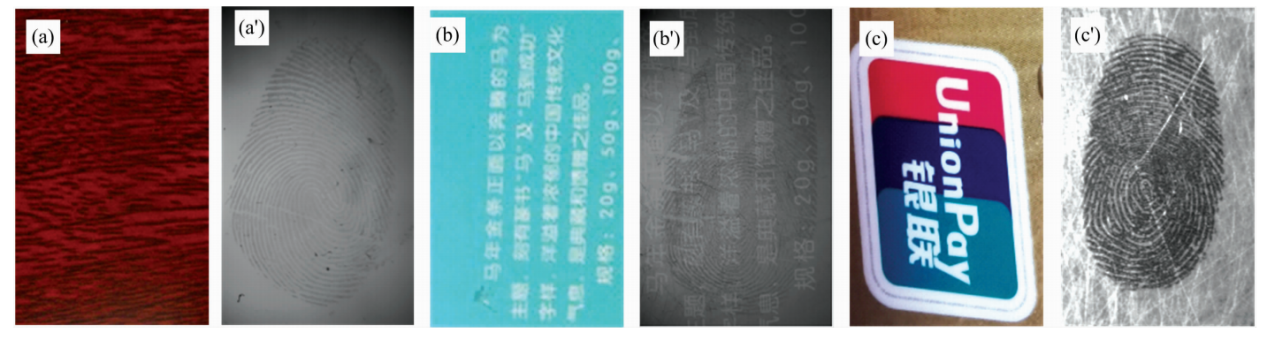
Fig. 1 Optical imaging of latent fingerprints (a, a'): Smooth floor, (b, b'): Semi-smooth card, (c, c'): Bank card
Powder Visualization Methods:- Metal/Magnetic/Fluorescent Powders: Rely on physical/electrostatic adhesion to fingerprint residues (e.g., sweat, oils).
- Limitations
- Shortwave UV excitation triggers harmful background fluorescence, reducing contrast.
- Health risks from UV exposure and toxic powders.
Plant Powders:Plant pollen is usually non-toxic and harmless. Among them, pine pollen has achieved good results in handprint display, but due to its high cost, it cannot be widely applied.Vegetable Powders:- Advantages: Non-toxic, cost-effective and fluorescent.
- Tested Materials: Broccoli, spinach and laver powders.
- Results: Broccoli powder showed the strongest fluorescence, making it ideal for latent fingerprint visualization.
2.Experimental DesignFluorescence Spectral Analysis: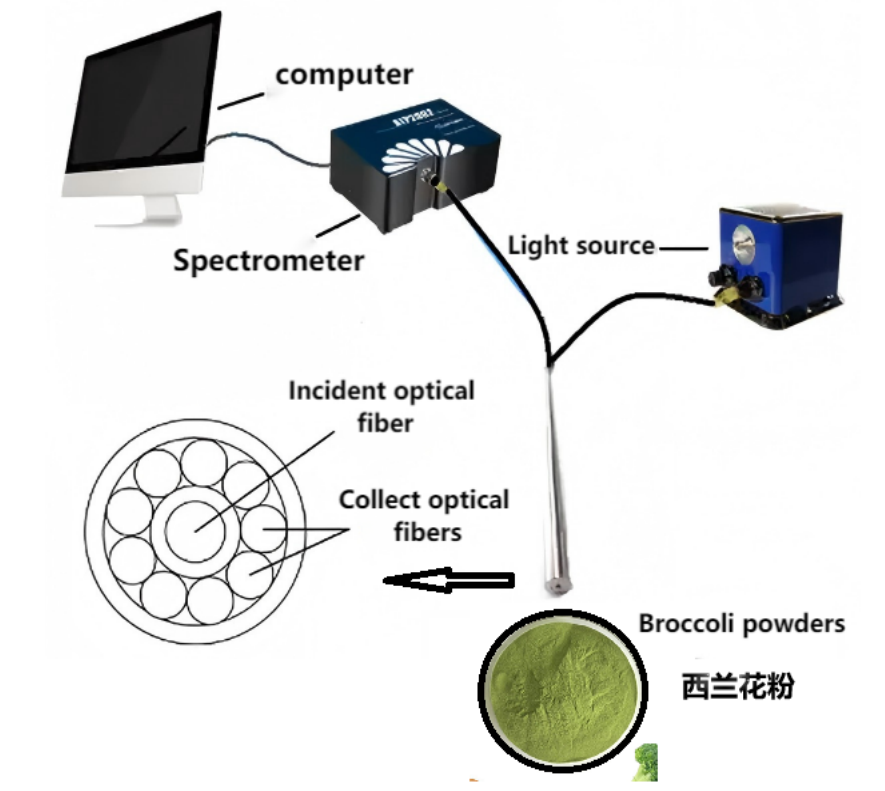
Fig. 2 Fluorescence Test Optical Path
Principle of Fluorescence Spectrophotometer: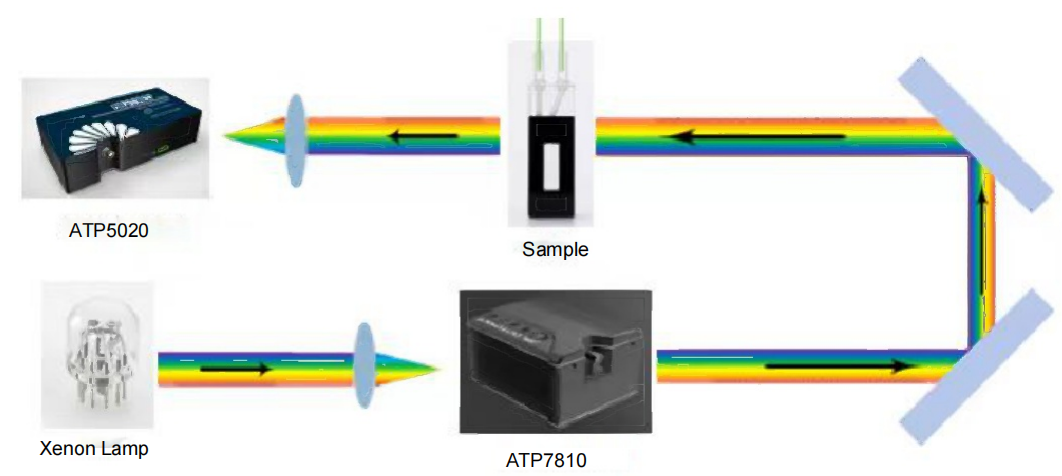
Fig. 3 Spectrophotometer Optical Path
Recommendation Product:ATP2000 (Universal type)ATP2400 (Ultra-thin type)ATP5020 (Sensitivity optimization type)ATP6500 (Sensitivity optimization type)
Samples:Commercially available broccoli, spinach, and laver powders (fine, monodisperse particles).
Experimental data:The fluorescence excitation and emission spectra of broccoli, spinach, and nori powders are shown in Fig. 1. Under 678 nm emission monitoring (Fig. 1a), all three exhibited a broad excitation band peaking at 417 nm (350-550 nm). When excited at 417 nm (Fig. 1b), their emission spectra peaked at 678 nm. Broccoli powder demonstrated the strongest fluorescence intensity, followed by spinach and nori. Based on these results, broccoli powder was selected for latent fingerprint detection.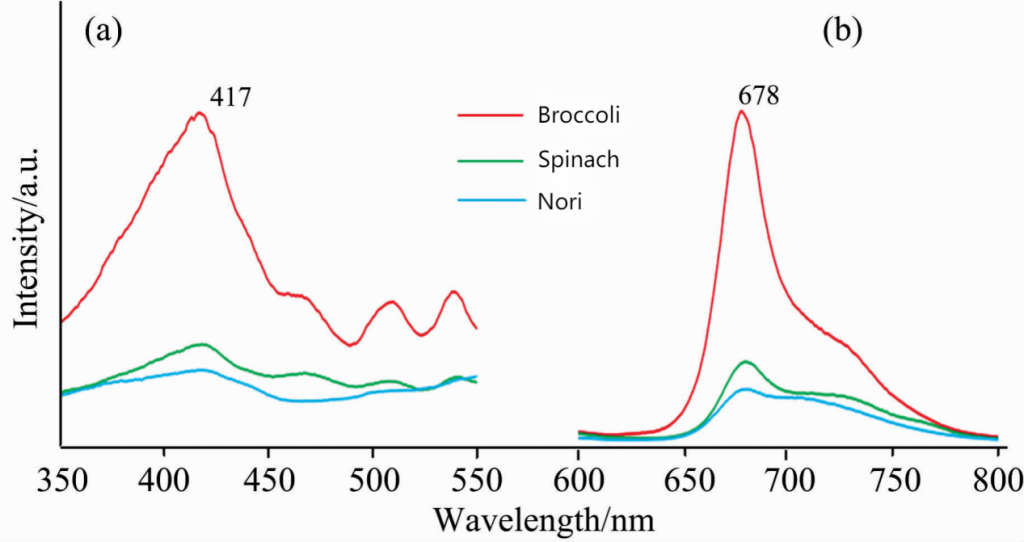
Fig. 4 Excitation (a) and Emission (b) Spectra of Vegetable Powders 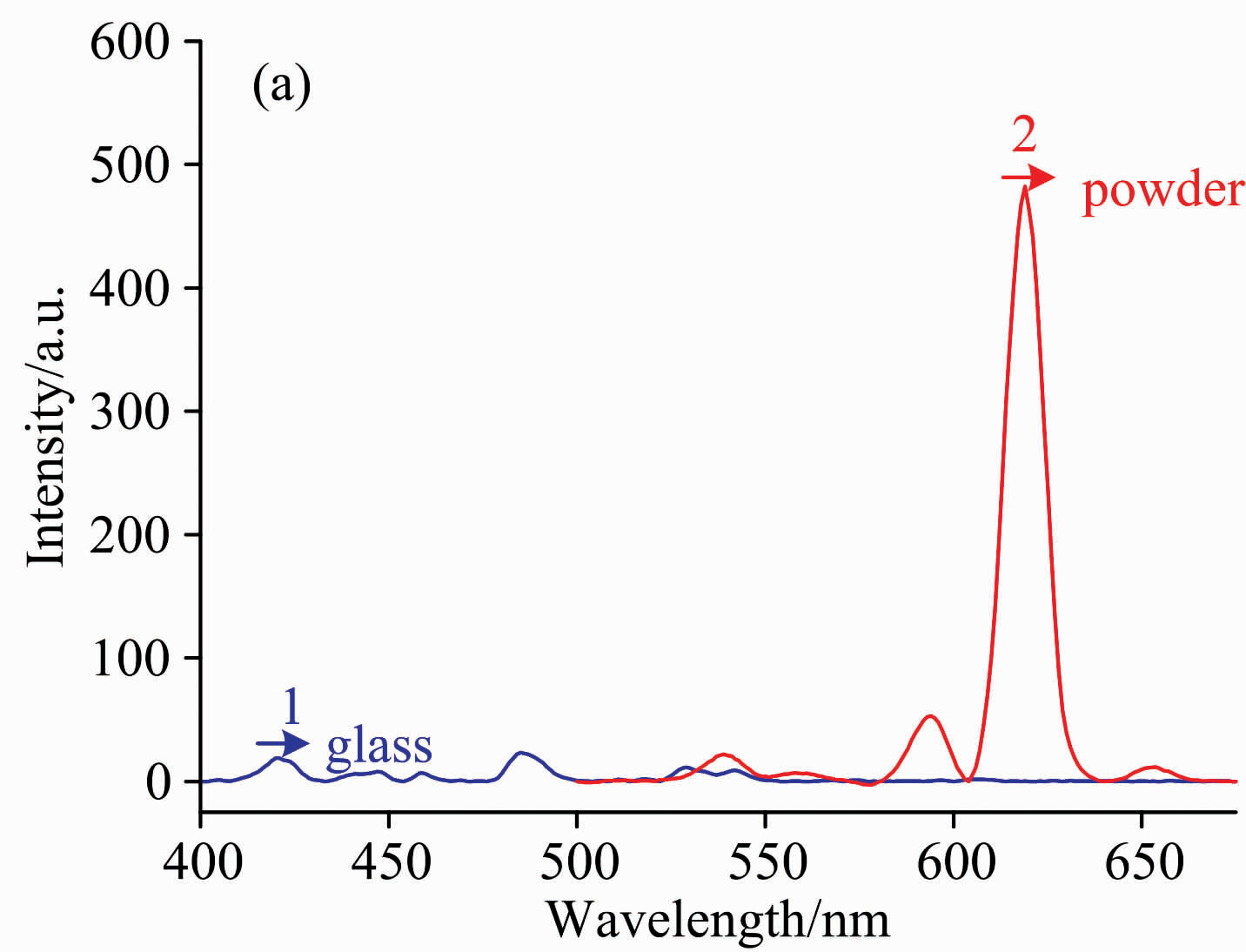
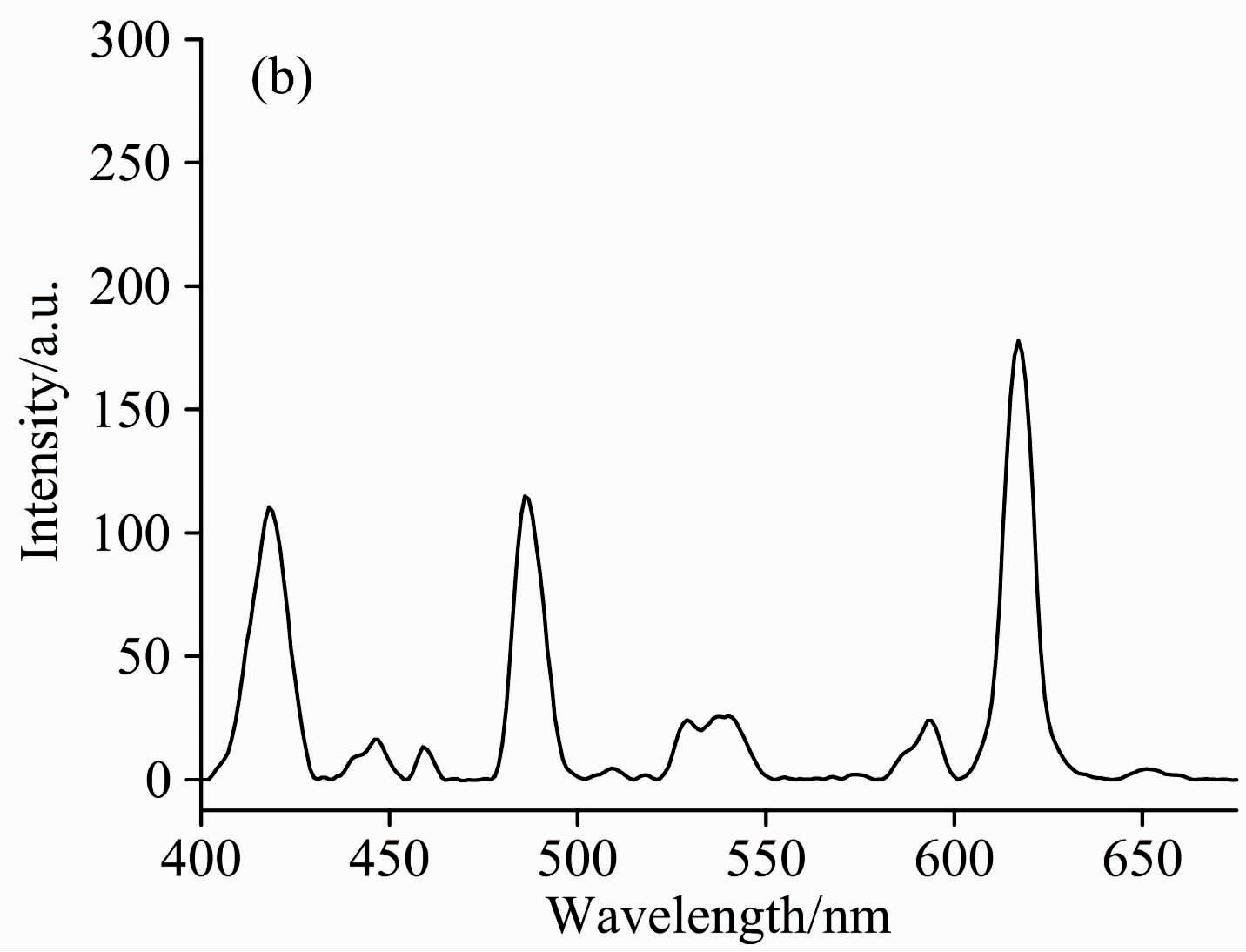 Fig. 5 Fluorescence Spectra of Glass Substrate (a) and Fingerprints (b)
Broccoli powder for fingerprint development:Experimental results demonstrated that the red fluorescence from broccoli powder significantly enhanced the contrast between fingerprint ridges and background, improving detection sensitivity. Additionally, its fine particle size and strong adsorption capacity promoted selective adhesion to fingerprint residues, further boosting sensitivity.
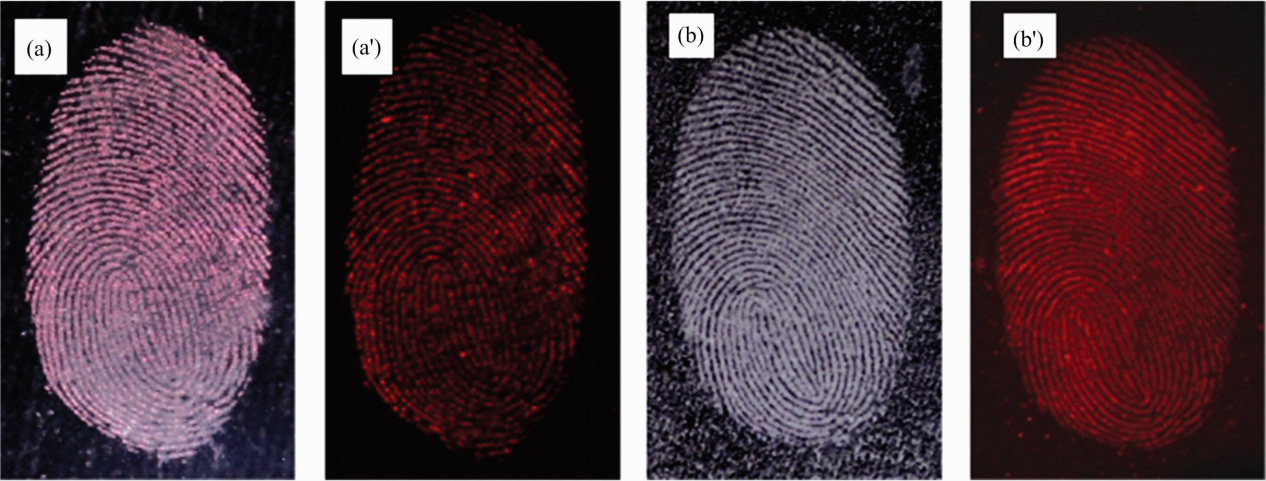
Fig. 6 Fingerprint Comparison: Traditional (a,a') vs. Broccoli Powder (b,b')
3.ConclusionsCommercial broccoli, spinach, and nori powders all share fluorescence characteristics with excitation/emission peaks at 417 nm and 678 nm. Broccoli powder exhibited the strongest fluorescence intensity, making it suitable for developing latent fingerprints on both challenging non-porous rough substrates and some porous surfaces at crime scenes. Experimental results demonstrated that broccoli powder produced fingerprints with clear and continuous ridges, distinct details, high contrast, and minimal background interference, achieving high detection sensitivity.As a non-toxic, cost-effective novel fluorescent fingerprint developer, broccoli powder shows promising application prospects for on-site fingerprint detection in forensic field operations.
References- Dai X., et al. "Fluorescence Spectroscopy of Vegetable Powders for Latent Fingerprint Visualization," Spectroscopy and Spectral Analysis, 2022, 42(1): 158–163. DOI:10.3964/j.issn.1000-0593(2022)01-0158-06.
- Shen D., et al. "Contrast Evaluation in Fingerprint Visualization Using Fluorescence Spectroscopy," Spectroscopy and Spectral Analysis, 2020, 40(1): 91–97. DOI:10.3964/j.issn.1000-0593(2020)01-0091-07.




Search
Categories
Popular Posts


Latest Posts







Comments: 0
No comments