

Your shopping cart is empty!
Rediscovering Ancient Greek Texts: How SWIR Hyperspectral Imaging Reveals Hidden History
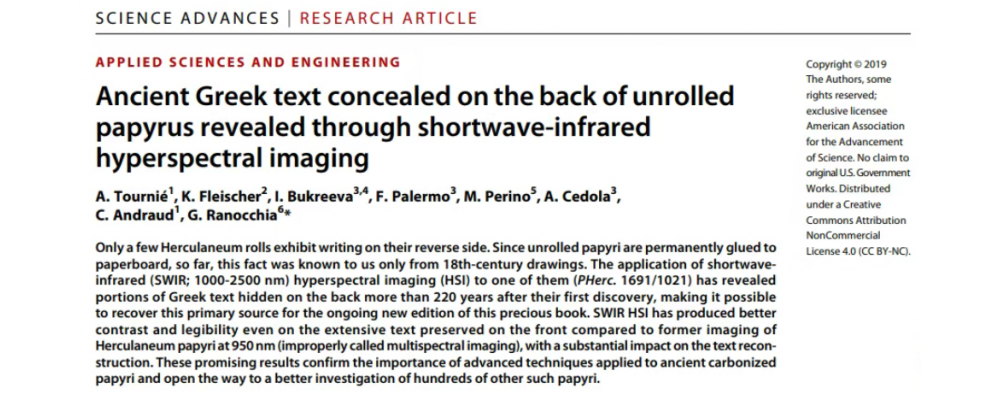
A novel, non-destructive imaging technique uses shortwave infrared hyperspectral data (1000-2500 nm) to successfully reveal hidden ancient Greek texts on Herculaneum papyri, recovering previously illegible writing.
In the study of cultural heritage, countless ancient manuscripts have become partially or completely illegible over time due to aging, unique preservation methods, or later restoration efforts. For years, scholars in philology and archaeology have faced the significant challenge of recovering this hidden information without damaging the fragile artifacts. Traditional imaging methods using visible and near-infrared light often fall short when attempting to penetrate layered structures, leaving obscured texts in a state of prolonged invisibility.
A Breakthrough in Papyrus Studies
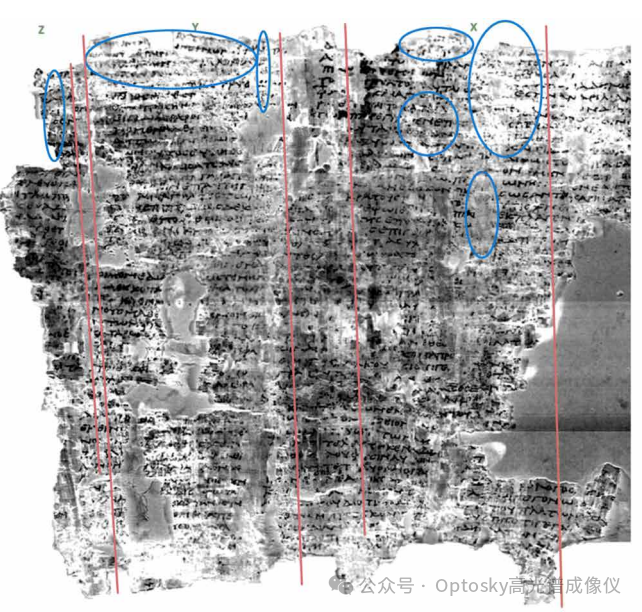
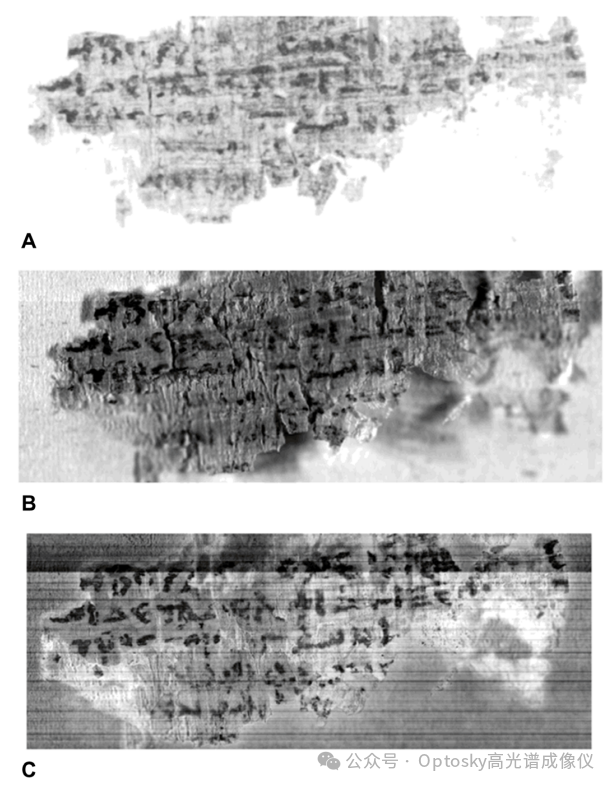
A pivotal 2019 study published in Science Advances demonstrated a revolutionary application of shortwave infrared (SWIR) hyperspectral imaging (spanning 1000–2500 nm) on ancient Greek papyri. The research focused on scrolls recovered from Herculaneum, which in the 18th century were mounted onto cardboard for stabilization. While this preserved their structure, it completely concealed the text written on their backs, rendering it unreadable for over two centuries.
The core question addressed was whether it was possible to read this covered writing without any physical contact or disassembly of the scrolls.
The Science Behind the SWIR Advantage
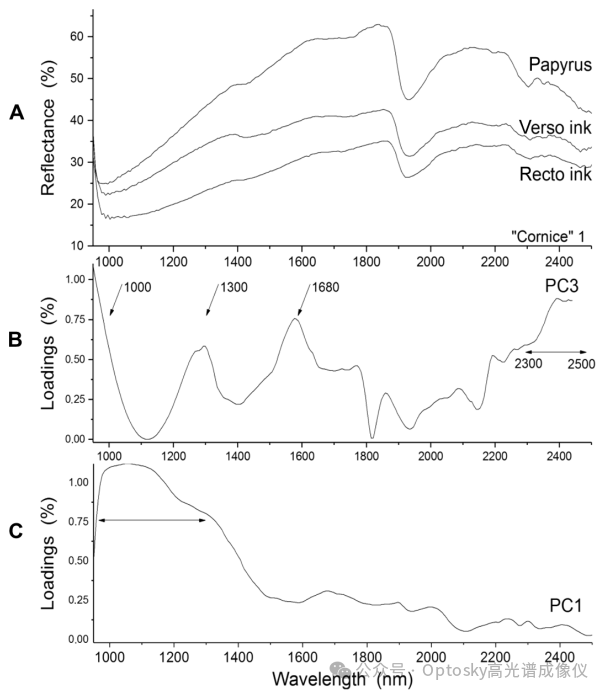
Why is the 1000–2500 nm shortwave infrared range so effective? Research confirms its distinct advantages for material differentiation:
· Carbon-based inks exhibit stronger absorption characteristics in the SWIR band.
· Papyrus fibers show a relatively flat reflectance in this region.
· The spectral contrast between the ink and its substrate is significantly enhanced in SWIR.
This means that even when covered by opaque cardboard, the hidden text can be detected through its unique spectral signature.
The Power of Hyperspectral Imaging and Multivariate Analysis
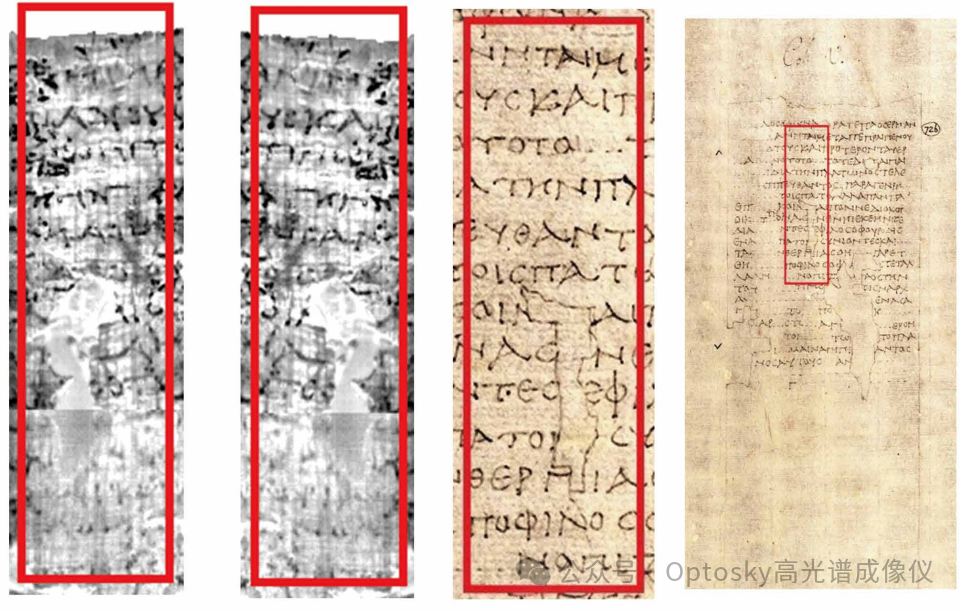
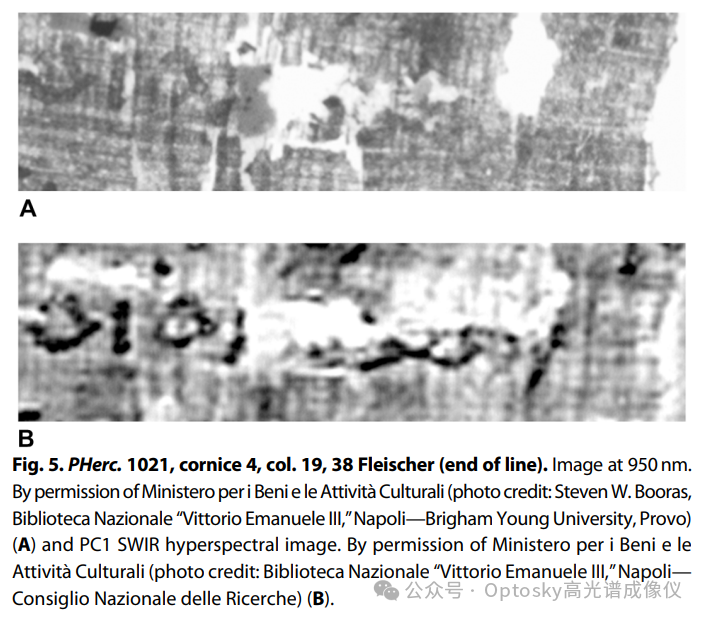
The study employed hyperspectral imaging, which captures a continuous spectral signature for every pixel in a spatial image. Researchers then applied multivariate statistical techniques, notably Principal Component Analysis (PCA), to separate the spectral features of different materials. This process achieved three key outcomes:
1. Enhanced the contrast between the front-side text (recto) and the papyrus base.
2. Successfully revealed the back-side text (verso) hidden beneath the opaque covering.
3. Clarified previously indistinct or entirely overlooked characters.
The results were striking. SWIR hyperspectral imaging not only revealed the hidden verso text but also identified, on average, five additional previously illegible words per column on the front. This has provided new textual evidence for reconstructing ancient Greek philosophical works.
From Laboratory Discovery to Practical Application
The success of this research paves the way for broader application. The transition of SWIR hyperspectral technology from the lab to real-world scenarios relies on stable, reliable, and engineered imaging systems.
Products like the ATH1010-25 Shortwave Infrared Hyperspectral Imaging System (from Optosky Photonics, Inc.) are designed specifically for the 1000–2500 nm range. Such systems offer a complete, non-contact, and non-destructive solution for obtaining the critical data needed in cultural heritage preservation, material science, and remote sensing.
Key Takeaways for Cultural Heritage
· SWIR hyperspectral imaging enables the separation of information from multi-layered manuscript structures.
· Reading obscured text through non-invasive, non-contact methods is now a feasible reality.
· This technology offers an irreplaceable advantage for cultural heritage research and sets a replicable technical standard for the non-destructive examination of paper artifacts, paintings, and other historical documents.
This breakthrough not only holds profound significance for classical studies and archaeology but also opens new windows into our shared past, allowing hidden voices from antiquity to speak once more.
For more information, please contact:
Email: optoskyphotonics@gmail.com
Web: www.optosky.net
-100x100.png)



Search
Categories
Popular Posts


Latest Posts







Comments: 0
No comments