

Your shopping cart is empty!

3D Fluorescence Spectroscopy: An Innovative Tool for Water Quality Management
3D Fluorescence Spectroscopy rapidly detects water pollutants through unique "water quality fingerprints," reducing health risks. Used in environmental, food, pharmaceutical, and scientific fields, the ATF4500 spectrometer ensures high sensitivity, fast scanning, and precise analysis.
Water quality analysis significantly impacts daily life and Public health. Human cells renew every 5 to 13 days; if drinking water safety is contaminated, this renewal process may be hindered. Consuming polluted water can lead to various diseases, including cancer, cardiovascular diseases, and kidney stones, as harmful substances in unclean water can induce disease development.  Disinfection byproducts, explosives residues, pesticides, fertilizers, and heavy metals in tap water are invisible health threats. Studies show that 79% of people nationwide face the issue of drinking polluted water, and 80% of diseases are water-related. However, simple boiling cannot remove heavy metals, pesticides, and other toxins from water. Therefore, ensuring safe drinking water from the source has become a top priority.
Water Quality Fingerprint Pollution Tracing Technology is a breakthrough in water environment monitoring. It introduces fingerprint recognition from criminal investigation into the water environment field, effectively solving the problems of difficult and slow water pollution tracing.
Technical Principle and Monitoring Process
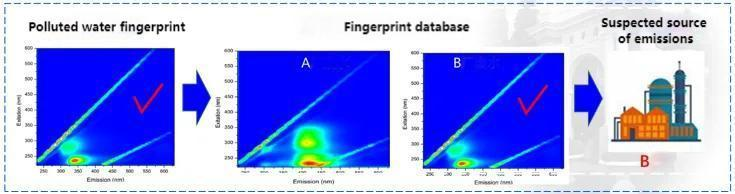
Wastewater from different pollution sources has a unique three-dimensional fluorescence spectrum as its "water quality fingerprint." The higher the pollution concentration, the stronger the fingerprint peak intensity. By comparing the fingerprint of the water sample to a known pollution source database, the pollution "suspect" can be quickly identified.
3D Fluorescence Spectrum:A spectral graph with emission wavelength on the horizontal axis, excitation wavelength on the vertical axis, and fluorescence intensity as contour lines.
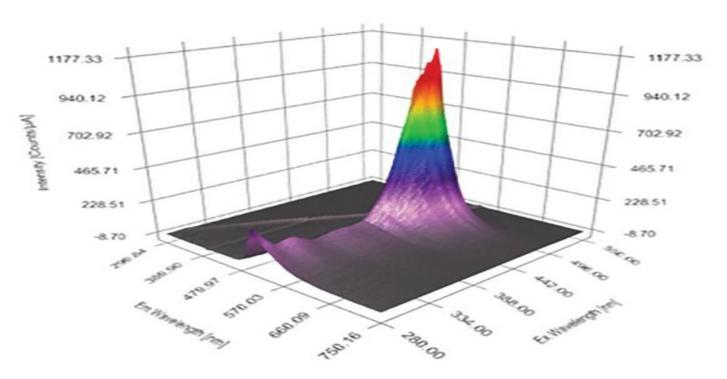
Water Quality Fluorescence Fingerprint: A three-dimensional fluorescence spectrum representing the composition of pollutants in a water sample.

Pollution Tracing: The process of detecting the water sample's fluorescence fingerprint, comparing it with known pollution sources, determining the path, verifying results, and identifying the pollution source.
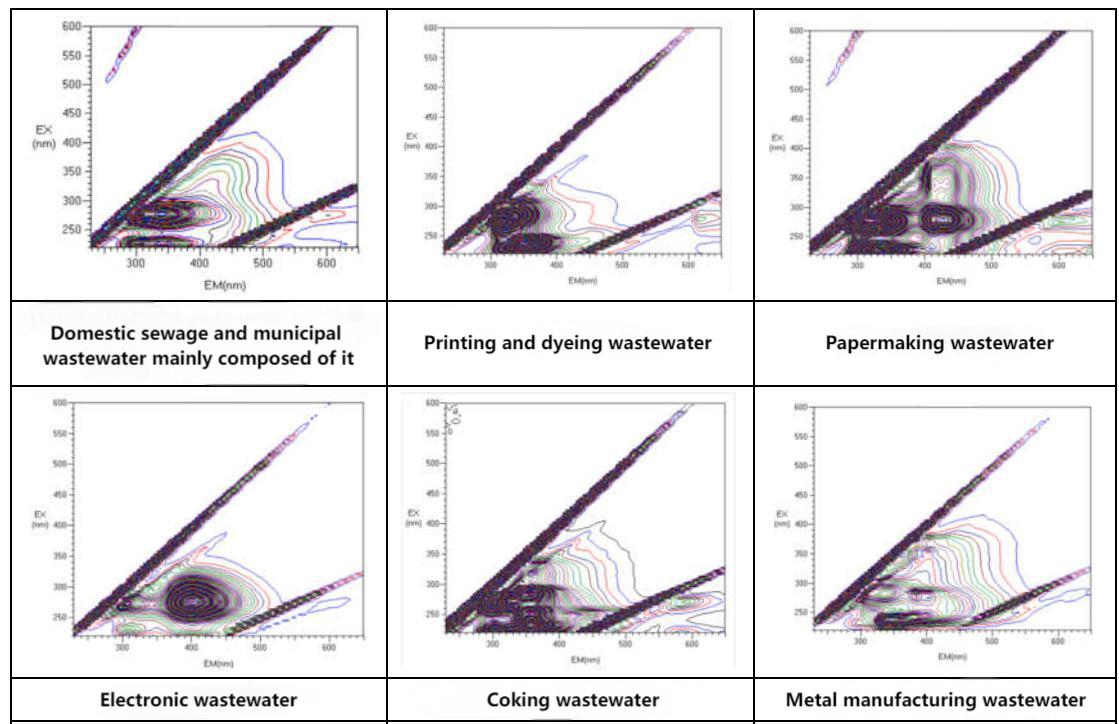
Common typical fluorescent fingerprints of water quality from pollution sources
The monitoring process includes setting up monitoring points, sample collection and preservation, water quality fluorescence fingerprint pollution tracing analysis (detection, comparison, path determination, result verification, and pollution source identification).
Core Instrument: Fluorescence Spectrometer
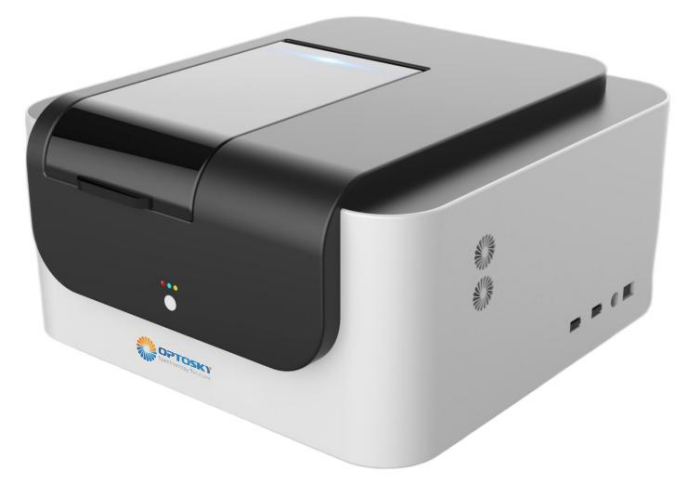
An instrument capable of detecting pollutants in water and generating 3D fluorescence spectra is called a fluorescence spectrometer. ATF4500, a high-sensitivity, ultra-fast data acquisition fluorescence spectrometer equipped with a long-life 150W high-power xenon lamp and a standard wide-range photomultiplier tube.
Applications:
Food, Pharmaceuticals, and Cosmetics:
Scientific Research
Routine Analysis
Quality Control
Environmental Monitoring:
Water Pollution
Dissolved Organic Matter
Production/Living Water Quality Testing
Soil Pollution Detection
Industrial water testing
Materials Science:
Nanomaterials
Luminescent Materials - OLED
Chemistry:
Photochemical Reaction Monitoring
Qualitative Analysis of Multicomponent Mixtures
Chemical contamination analysis
Medicine:
Cancer Cell/Bacteria Identification
Biology/Life Sciences
Bioenergy Conversion: Photosynthesis
Analysis of Drugs, Hormones, Proteins, Vitamins, and DNA
Advantages:
Ultra-Fast Wavelength Scanning:
Equipped with a built-in rotary encoder and high-speed motor, ATF4500 achieves ultra-fast wavelength scanning with precise wavelength positioning.
High Sensitivity:
Enhanced excitation light energy, improved detector performance, and optimized signal processing contribute to advanced optical technology, resulting in higher sensitivity.
Fluorescence Intensity Standardization:
The standardization function corrects fluorescence intensity variations due to factors like light source brightness, ambient temperature changes, and optical system conditions.
Comprehensive Software Support:
The system can compile and export three-dimensional measurement data, facilitating detailed analysis.
Long-Life Light Source (2500 hours):
Utilizing a new xenon lamp and improved power supply, ATF4500 enhances light source brightness and effectively extends lamp lifespan.
Automatic Light Source Position Adjustment:
After lamp replacement, the system automatically adjusts the light source position to ensure optimal detection performance. The structured lamp holder design simplifies the replacement process.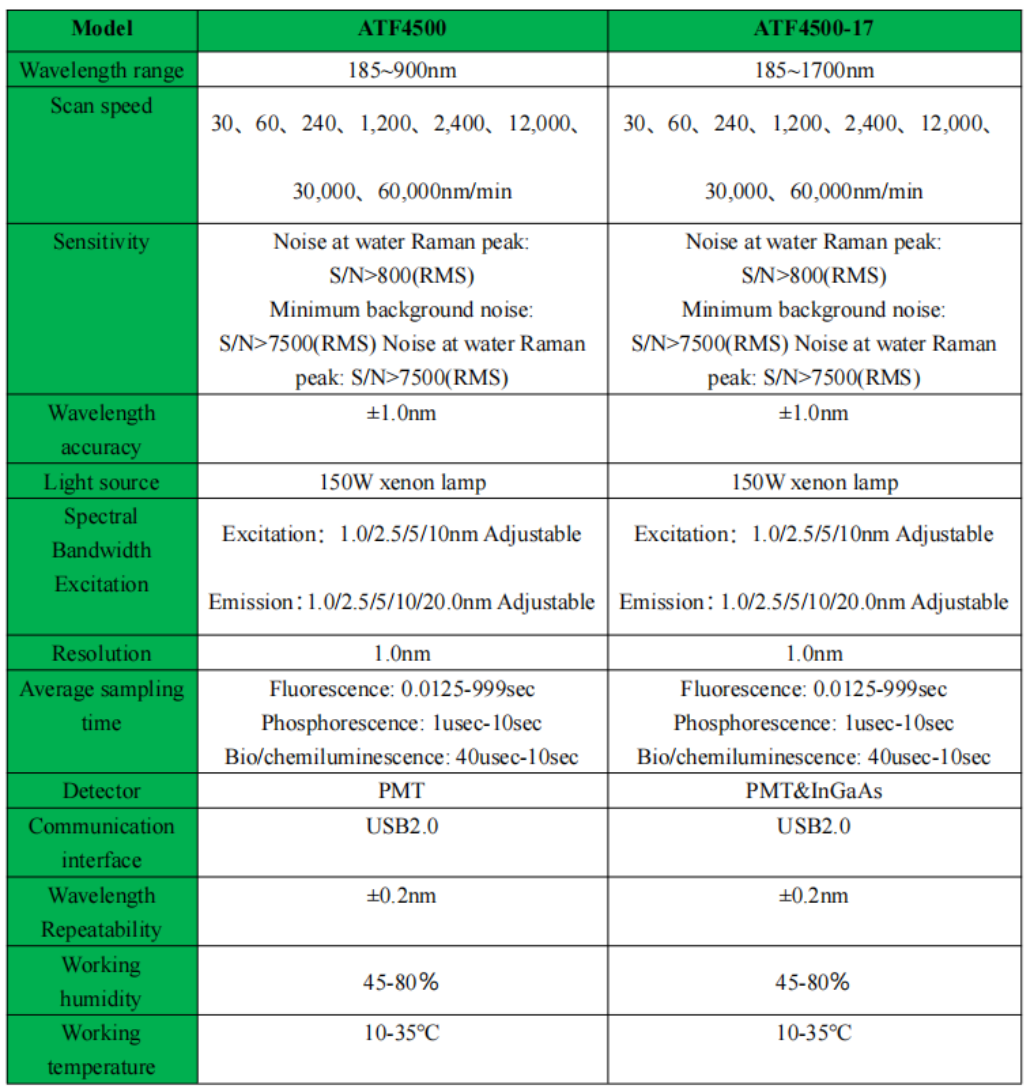
-100x100.jpg)




Search
Categories
Popular Posts


Latest Posts







Comments: 0
No comments