

Your shopping cart is empty!
The "All-Rounder" of Raman Lasers: Why Has 785nm Become the Standard?
Why is 785nm the standard Raman laser?✓ Best balance: anti
fluorescence + low sample damage + good signal + low cost✓ Covers 90% of routine applications — from pharma to food to polymers
Not perfect for everything — but perfect for most.Know its strengths and limits, and you'll choose right every time.
#RamanSpectroscopy #785nm #LaserExcitation #AnalyticalChemistry
Raman Laser
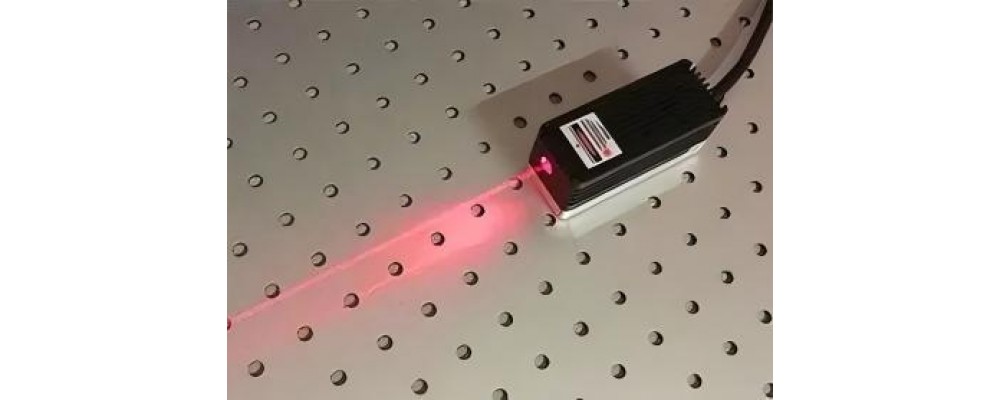
The laser used in Raman spectroscopy (the excitation laser) is the core light source of a Raman spectrometer. Its role is to provide monochromatic, coherent, and highly stable excitation light. When this light undergoes inelastic scattering with sample molecules, it generates Raman shift signals. The laser's wavelength, power, linewidth, and other parameters directly determine the sensitivity, fluorescence rejection capability, spatial resolution, and sample compatibility of Raman detection.
The 785nm Raman Laser
The 785nm Raman laser is a near-infrared semiconductor laser. It has become the most widely used and most adaptable standard light source in Raman spectroscopy, balancing four core advantages: anti
fluorescence interference, good signal strength, low sample damage, and excellent cost-effectiveness. It covers more than 90% of routine detection scenarios — from laboratory benchtop instruments to portable/handheld Raman devices. It is also the first choice for unknown sample screening and general qualitative/semi-quantitative analysis, earning its reputation as the industry's "universal benchmark."
1. Core Detection Advantages
Excellent fluorescence rejectionLow photon energy effectively suppresses fluorescence excitation in most organic samples, biological samples, and mildly fluorescent industrial chemicals. This prevents fluorescence from overwhelming Raman signals — the key advantage over visible lasers (532/633 nm).
Minimal sample photodamageNo UV/visible light photolysis or thermal ablation. Can directly detect heat
sensitive or easily degradable samples such as biological tissues, polymers, food, and pharmaceuticals — without additional sample protection measures.
Moderate signal strengthAlthough the λ⁴ law gives weaker signals than 532 nm, 785nm signals are still 5–8 times stronger than 1064 nm. A standard silicon
based detector is sufficient for clear Raman spectra — no need for high-gain, high
cost detectors.
High equipment compatibilityNo special optical components required (e.g., UV
grade coatings, IR
specific lenses). Standard Raman optical systems achieve efficient light transmission (>80%), reducing design and maintenance costs.
Low operational barrier
Power adjustment and focusing are basic Raman operations. No specialized wavelength calibration is needed. Even beginners can use it for unknown sample screening — suitable for both laboratory and field rapid testing.
2. Best Application Scenarios
Covers 90% of routine Raman applications. It is the first choice excitation light for unknown samples — after confirming no strong fluorescence, you can directly perform qualitative analysis. Core compatible samples and scenarios include:
Core compatible samples
*Organic materials – plastics, rubber, resins, coatings, organic solvents, oils*Pharmaceuticals – raw materials, tablets, capsules, packaging materials, counterfeit drug screening*Food industry – food additives, cooking oils, milk powder, beverages, agricultural product identification*Biological samples – cells, bacteria, tissue sections, proteins (mild fluorescence)*Chemical industry – chemical raw materials, polymers, adhesives, personal care products (shampoos, lotions)*Mildly fluorescent inorganic samples – some metal oxides, glass, ceramics (without strong fluorescent dopants)
3. Limitations *Strongly fluorescent samples – Dyes, dark polymers, natural products (traditional Chinese medicines, plant extracts), cultural relics, fluorescently doped materials. Even 785nm may still excite weak fluorescence, resulting in low SNR Raman spectra.*Ultra high resolution micro imaging – Spatial resolution (micron level) is lower than 532nm (sub micron level). Cannot meet ultra high precision micro
analysis needs such as semiconductor lattices or single carbon nanotube analysis.*Resonance Raman detection – Cannot resonate with the electronic energy levels of sample molecules. No signal enhancement effect. Not suitable for ultra
sensitive detection that requires resonance enhancement (e.g., catalyst active sites, biomolecular conformation).*Ultra sensitive detection of weak scatterers – Signal strength insufficient for trace (picogram
level) samples. Requires SERS substrates or switching to 532nm / UV lasers.
For more information, please contact:Email: optoskyphotonics@gmail.comWeb: www.optosky.net
-100x100.png)

Search
Categories
Popular Posts


Latest Posts







Comments: 0
No comments