

Your shopping cart is empty!
From Color to Flavor: Hyperspectral Imaging Decodes Coffee Ripeness-1
Discover how hyperspectral imaging and chemometrics enable rapid, non-destructive coffee ripeness testing with 95% accuracy, linking color changes to sugar, acid, and flavor precursor buildup for specialty coffee quality control.
The birth of a specialty coffee does not begin with roasting, but with picking.
The ripeness of coffee cherries directly determines the accumulation of flavor precursors such as sugars, acids, amino acids, and fatty acids, which ultimately affects the aroma, taste, and overall quality of the coffee. However, current coffee harvesting still relies mainly on manual observation of peel color, which is not only inefficient but also inaccurate in judging the internal quality of the fruit.
Recently, Food Science published a new study that uses hyperspectral imaging technology combined with chemometric models to achieve rapid, non-destructive detection of ripeness in Yunnan arabica coffee cherries, with a classification accuracy of 95.26%, providing a new technical pathway for precision harvesting and quality control of coffee.
01 Why Is Coffee Ripeness So Important?
Many people think:
Red means ripe.
But that is not actually the case.
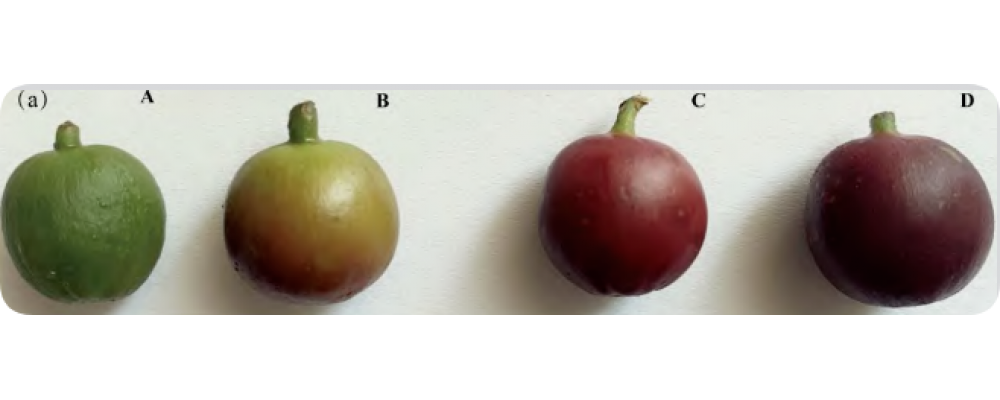
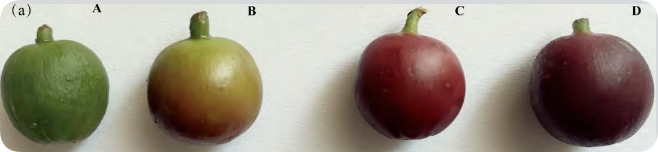
During the ripening process, coffee cherries undergo not only color changes but also complex internal metabolic processes:
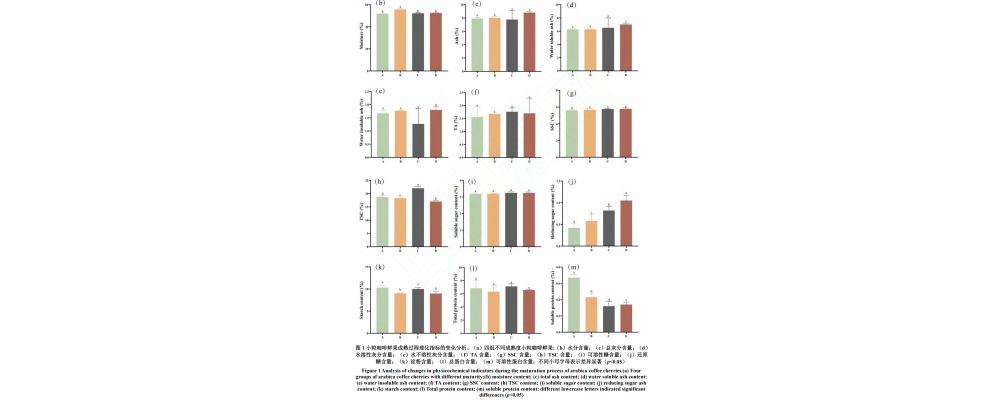
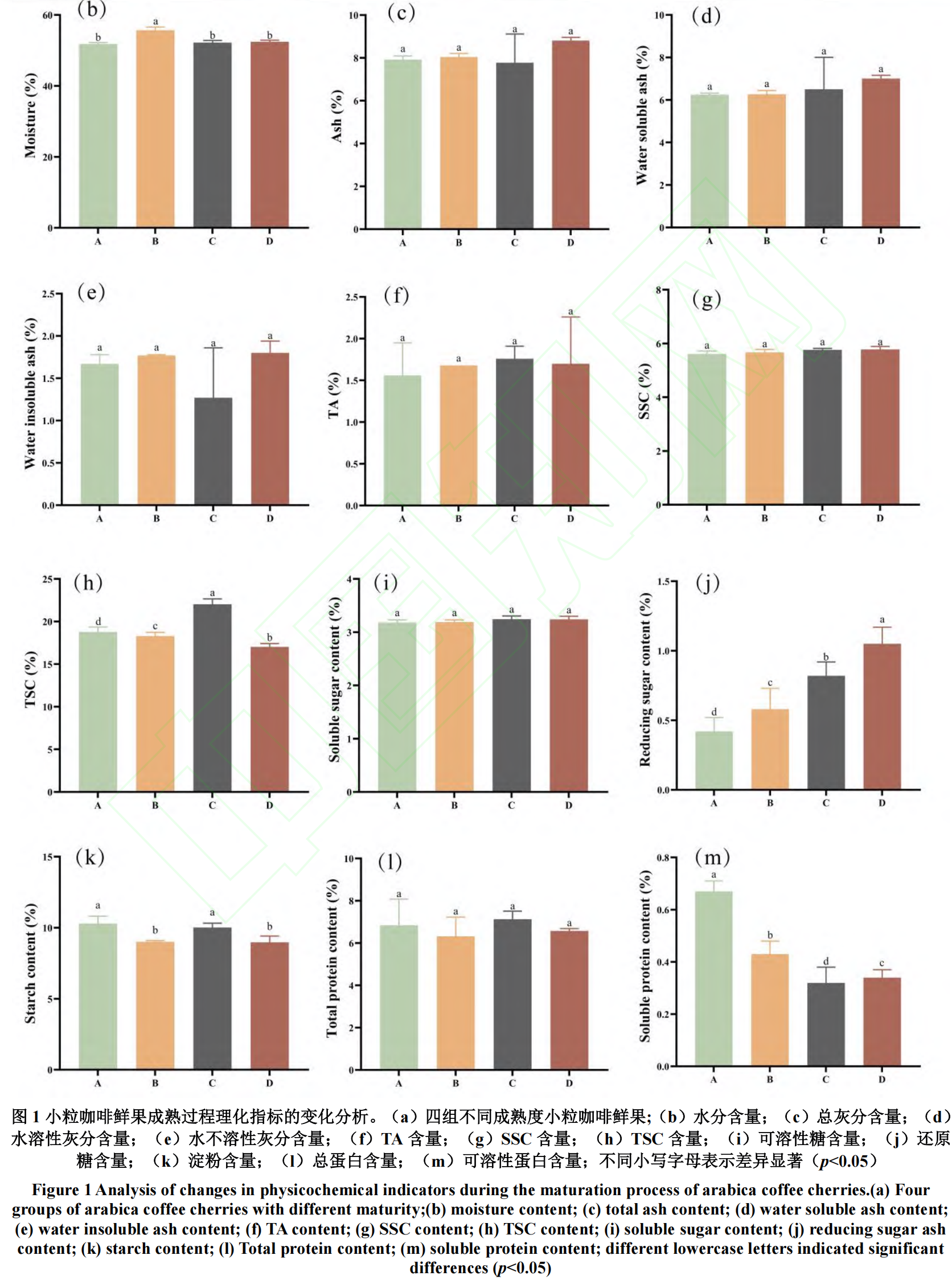
Soluble solids (SSC) continuously increase
Total sugar (TSC) accumulates
Amino acids change dynamically
Fatty acids are restructured
Organic acids fluctuate
These components collectively determine how much aroma is produced during subsequent Maillard reaction and caramelization, and ultimately whether the coffee exhibits floral, fruity, nutty, and rich layered notes.
Research findings:
As ripeness increases,
Soluble solids increase by about 80%
Reducing sugars increase more than 4-fold
Total sugars accumulate steadily
Moisture gradually decreases
Fatty acid composition changes significantly
All these are critical indicators for specialty coffee quality.
02 Why Does Manual Picking Go Wrong?
Traditional harvesting relies mainly on green or yellow to judge ripeness.
But in reality:
Color can only reflect external changes, not whether internal sugars, acids, and flavor precursors have truly reached their optimum.
Coffee cherries at different ripening stages often show significant differences in internal quality. Relying solely on experience can easily lead to:
Early picking
Mixed harvesting
Lower specialty rate
Flavor inconsistency
Therefore, the industry urgently needs a rapid, non-destructive, and objective detection technology.
03 How Does Hyperspectral Imaging "See" Internal Coffee Quality?
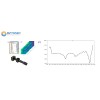
The study used a 398.5–1002.2 nm hyperspectral imaging system, capturing 176 continuous bands at once, not only acquiring fruit images but also simultaneously recording spectral information for each pixel.
Different bands correspond to different information:
400–700 nm (Visible light) – reflects chlorophyll, anthocyanins, carotenoids – can judge color changes.
700–1000 nm (Near-infrared) – reflects moisture, sugars, organic acids, tissue structure – can reveal internal quality changes.
The study found that:
As ripeness increases, the red-edge region near 650–700 nm shows the most obvious change; the region near 950–980 nm is closely related to moisture, sugar, and other quality indicators, providing an important basis for ripeness classification.
References
1. Li Zelin, Wang Kunxian, Dao Jian, Shang Dapeng, Peng Jingqiu, Fan Jiangping, Gong Jiashun. Non‑destructive discrimination of fresh fruit maturity and changes of flavor precursors of Yunnan arabica coffee cherries based on hyperspectral[J]. Food Science, 2026. DOI: 10.7506/spkx1002‑6630‑20260126‑213
For more information, please contact:
Email: optoskyphotonics@gmail.com
Web: www.optosky.net

-100x100.jpg)


Search
Categories
Popular Posts


Latest Posts







Comments: 0
No comments