

Your shopping cart is empty!
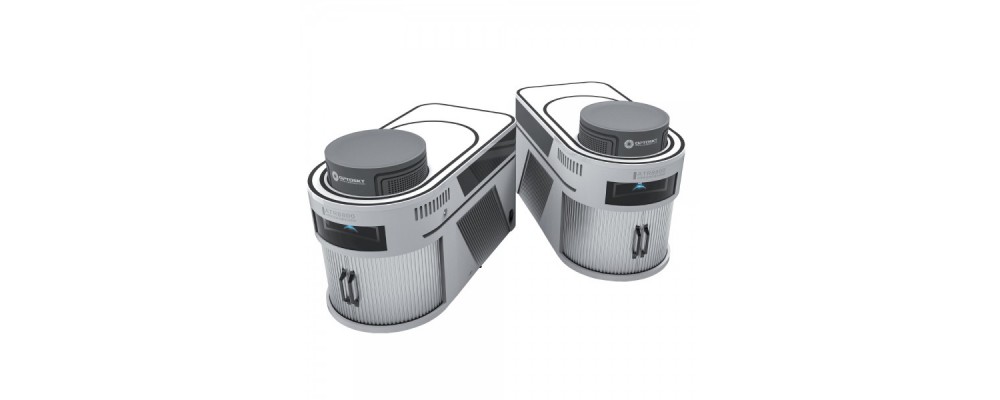
Unlocking Depth & Precision: Confocal Raman Microscopy in Pharmaceutical Analysis
Explore how confocal Raman microscopy revolutionizes pharmaceutical testing. Learn the principles of high spatial resolution, non-destructive depth profiling, API mapping, and polymorph identification with Optosky Raman systems.
Introduction
In modern pharmaceutical R&D and manufacturing, understanding the exact spatial distribution of components, crystal forms (polymorphs), and chemical purity is vital. Traditional analytical methods often require complex sample preparation or destructive extraction.
Confocal Raman Microscopy has emerged as a game-changing analytical technique in the pharmaceutical industry. By delivering non-destructive chemical fingerprinting with ultra-high spatial resolution, it allows researchers to examine solid dosage forms, tablets, powders, and transdermal patches with unprecedented clarity.
How Confocal Raman Microscopy Works (The Principle)
Raman spectroscopy relies on the inelastic scattering of monochromatic light to identify molecular vibrations. However, standard Raman microscopy often collects scattered light from both the focal plane and surrounding out-of-focus layers, leading to background interference.
The "Confocal" Advantage:
- Pinhole Spatial Filtering: A pinhole aperture is placed in the conjugate focal plane of the optical system.
- Out-of-Focus Light Suppression: Only Raman signals originating precisely from the laser focal point pass through the pinhole to the detector, blocking signals from above or below the focal plane.
- High Spatial & Optical Sectioning Resolution: This optical design enables sub-micron spatial resolution ($<1\,\mu\text{m}$) and 3D optical depth profiling without physical slicing or damaging the sample.

Key Applications in Pharmaceutical Analysis
1. API & Excipient Spatial Mapping
Ensuring the uniform distribution of Active Pharmaceutical Ingredients (APIs) and excipients is critical for batch consistency and controlled drug release. Confocal Raman mapping creates high-contrast 2D/3D chemical maps showing exact domain sizes and blend uniformity in intact tablets.
2. Polymorph & Solvate DiscriminationDifferent crystalline forms (polymorphs) of a drug can drastically alter its bioavailability, solubility, and shelf life. Because Raman spectroscopy is highly sensitive to crystal lattice vibrations, confocal Raman can rapidly distinguish polymorphs, hydrates, or amorphous states directly within the final formulation.
3. Depth Profiling of Coatings & Multilayer TabletsConfocal optics allow non-destructive "slice-by-slice" optical sectioning. Analysts can non-destructively measure tablet coating thickness, inspect multilayer film tablets, and evaluate transdermal patch layers along the Z-axis.
4. Counterfeit Drug Identification & Contaminant AnalysisIdentify foreign particles, micro-contaminants, or subtle counterfeit formulations instantly by comparing micro-Raman spectra against comprehensive pharmaceutical spectral libraries.
Why Choose Optosky Confocal Raman Solutions?
Optosky Confocal Raman Microscopes are engineered for high-throughput laboratory R&D and strict industrial QC environments:- High Spatial & Spectral Precision: Resolve fine domain features down to the sub-micron scale.
- Automated 2D/3D Mapping: Seamlessly switch between surface mapping and deep Z-axis optical profiling.
- Pharmaceutical Library Integration: Fast spectral identification of APIs, excipients, and polymorphic structures.
- Flexible Excitation Wavelengths: Multi-laser options (e.g., 532 nm, 785 nm, 1064 nm) to effectively manage fluorescence in organic pharmaceutical compounds.
Accelerate Your Pharmaceutical Research Today
Whether you are optimizing tablet formulations, troubleshooting polymorph transformations, or ensuring quality compliance, Optosky provides reliable, advanced Raman solutions tailored to your workflow.



Related Products

500.00″W x 823.00″D x 643.00″H
ATR8800
Search
Categories
Popular Posts


Latest Posts







Comments: 0
No comments